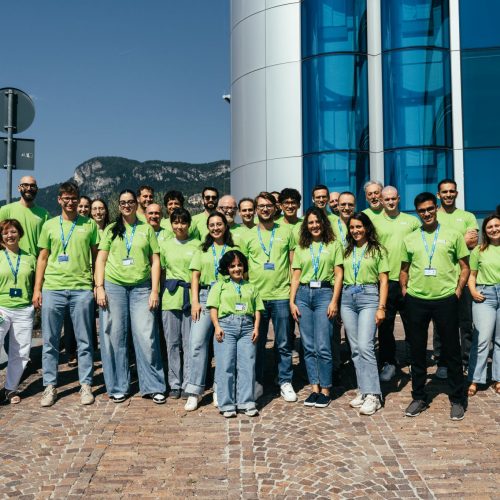
The 2026 edition of the “Pioneers in Research” summer school is devoted entirely to technologies in the energy sector, a cutting-edge field in which FBK actively contributes to progress at both the national and European levels. Thirteen young talents took part, participating in workshops and engaging in discussions with experts on hydrogen, batteries, and advanced materials.
Talent is like a garden in bloom: it thrives when nurtured consistently over time. The summer school offers master’s students a unique opportunity to experience research firsthand, strengthen their skills and résumés, explore future possibilities, and gain the confidence and direction they need to flourish.
Following the success of the first edition, dedicated to the quantum frontier, this year’s participants followed the same approach, entering FBK laboratories dedicated to electrochemistry, advanced materials, and energy systems under the guidance of research staff.
The students came from seven universities: five from the Polytechnic University of Turin, two from the Polytechnic University of Milan, two from the University of Cassino and Southern Lazio, one from the Polytechnic University of Bari, one from the University of Trento, one from the University of Genoa, and one from the National Technical University of Athens.
Through lectures, hands-on workshop sessions, and visits, the students followed the development of innovative materials, learned about next-generation batteries and hydrogen technologies, and explored the role of sustainability in its broadest sense, as well as AI, in future energy scenarios.
This experience, scientifically coordinated by FBK’s Center for Sustainable Energy supported by the Scholars and PhD Programme unit, was designed to inspire future researchers and bridge the gap between theory and practice, providing the tools and hands-on experience needed to navigate the ongoing energy transition and, why not, become pioneers in it.
The five-day program ran from September 7 to 11, primarily from 9:00 a.m. to 5:00 p.m., leaving the students’ evenings free to experience Trento, network, or relax.
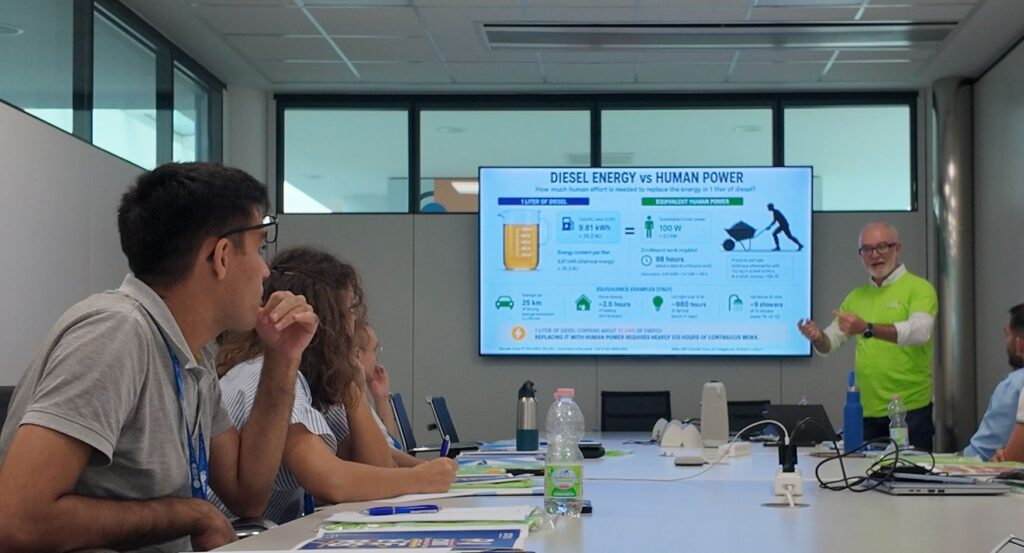
The course opened with SE Center director Luigi Crema, who presented the international geopolitical landscape, providing a snapshot of the current situation and projecting the evolution of the energy sector through 2050. He offered a detailed and complex picture of Europe’s situation, caught between the constraints imposed by the U.S. and Chinese giants in the sector. This situation can be summed up in the changing names of its policies, understood as a symptom of a shift in cultural attitudes: from the Green New Deal (2019) to the Clean Industrial Deal (2025) and finally to the Industrial Accelerator Act (March 2026).
Many other relevant topics were discussed, including the shift in the center of gravity of energy systems from resources to enabling knowledge, the true driver of geopolitical power and the basis for the importance of scientific and technological research. “On climate change,” Crema continues, “mitigation strategies are needed immediately.” And finally, a broader perspective: “Strategic thinking is needed to integrate, in organizations as well as in national policies, the ability to combine people, processes, technology, and culture to achieve long-term goals by gaining a sustainable competitive advantage.”
A fundamental observation shapes our understanding of this evolving context: “We need more energy because global demand is growing rapidly, and that energy needs to be cleaner—because the environmental costs we are already paying are high and will become unsustainable—as well as safe and affordable.”
The “hundred-million-barrel question” that remains unanswered is: Can the EU achieve climate neutrality while preserving its competitiveness and energy security?
In this scenario, the FBK SE Center promotes the development of tools and methods for the creation, storage, and distribution of low-environmental-impact energy solutions. This approach is framed within a vision of environmentally sustainable energy, systems and solutions that respect the environment and quality of life, and solutions with a lower impact on health and environmental pollution at various levels.
The SE Center’s mission is based on decarbonization goals, which require a more flexible energy system with electricity and gas grids, as well as the use of energy carriers and storage solutions that enable the large-scale introduction of renewable energy.”
HANDS-ON
On Tuesday, September 8, accompanied by Matteo Bordin, Gloria Gottardi, Victor Micheli, and Sandro Zorzi, the students visited the Research Center laboratories:
- Cluster Lab, where cutting-edge plasma-based technologies are used to develop and synthesize innovative materials that contribute to advances in next-generation hydrogen and battery technologies;
- Hydrogen Lab, dedicated to testing fuel cells and electrolyzers based on various technologies, such as solid oxide cells (SOCs) and anion exchange membranes (AEMs), from individual cells to complete stacks, including reversible operation;
- Electrolab, for the physicochemical characterization of advanced materials.
On Wednesday, September 9, they focused on lithium-ion and flow battery technologies with Mattia Duranti and Matteo Gandolfo and on renewable hydrogen technologies, particularly electrolyzers, led by Elena Crespi, Gabriele Turco, and Emanuele De Bona. After a theoretical introduction, the pioneers entered the Battery Lab and the Hydrogen Lab, where they got their hands dirty assembling batteries and electrolyzers themselves. Once the assembly was complete, they connected them to the test bench and defined the experimental parameters based on the concepts learned in the morning lectures. “It was exciting to see with our own eyes and get our hands on technologies that we had previously only seen on paper,” commented one student.
In addition to technical skills, particular attention is also given to discussion as a way to exercise critical thinking and understand the complex dynamics of innovation.
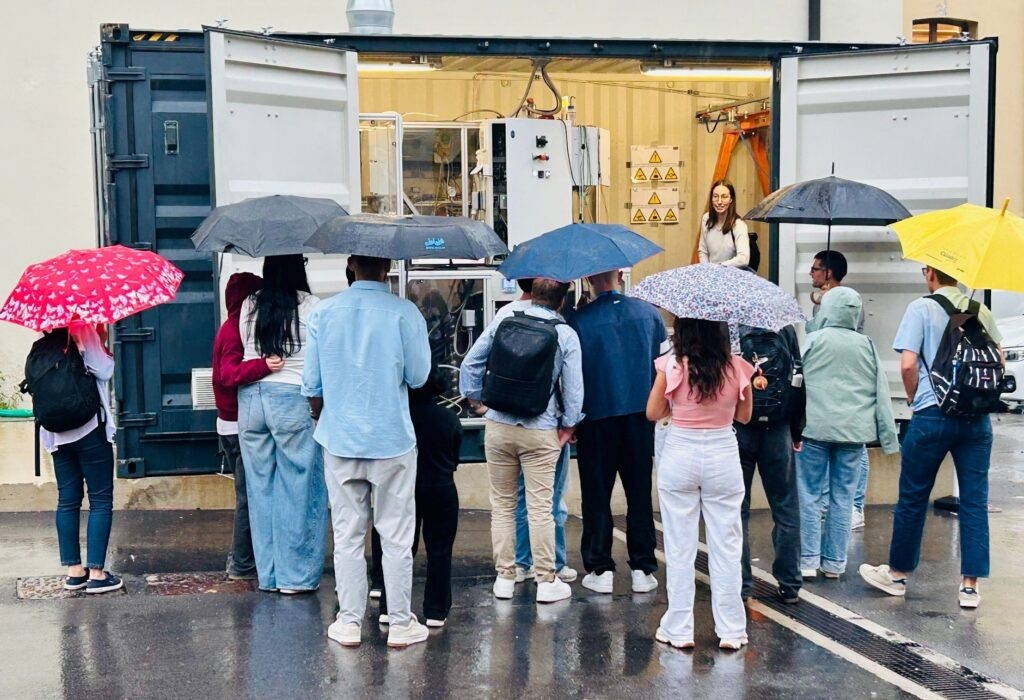
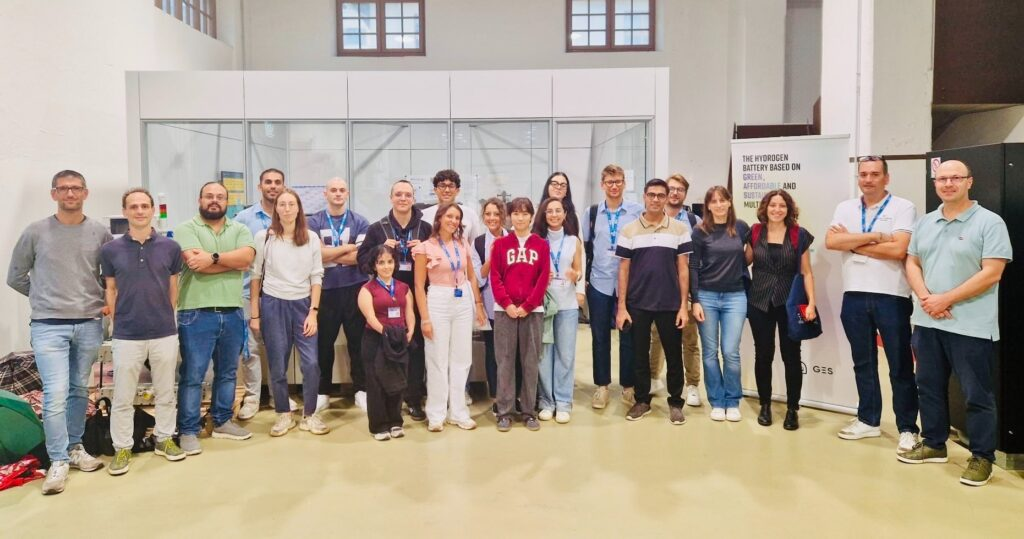
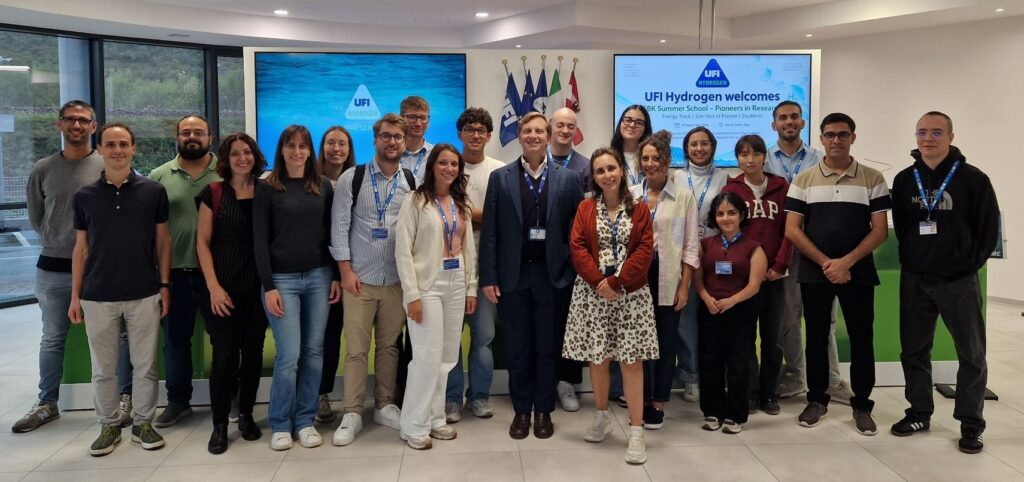
Consistently, on Thursday, September 10, they visited two innovative companies in the energy sector (UFI Hydrogen and Green Energy Storage) and the SE Center’s TESSLabs laboratories at the Progetto Manifattura site in Rovereto.
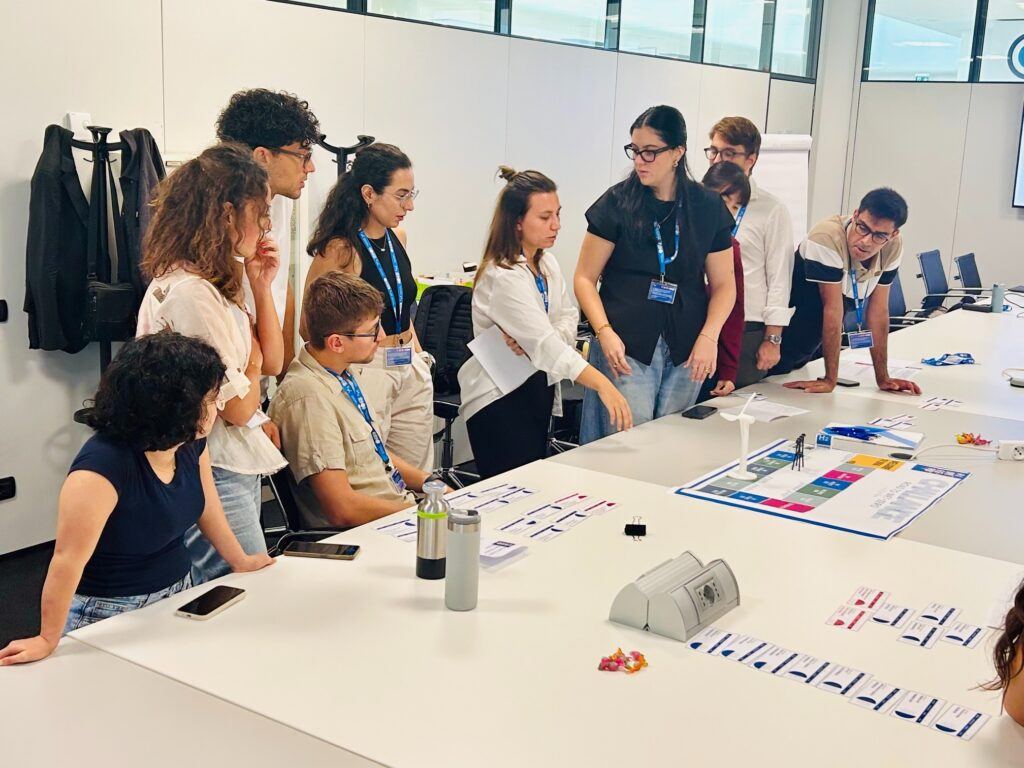
The last day, Friday, September 11, was dedicated to teamwork: the Pioneers took part in “Road to NetZero,” a knowledge challenge centered on dialogue and interdisciplinary collaboration, combining a board game with a future-oriented exercise (backcasting).
Futures under the lens
The topics explored in depth included new materials, batteries, storage systems, and renewable sources. The entire final session was devoted to discussion and gaming, during which participants collaboratively discussed solutions to address the challenge of achieving zero emissions by 2050. The “Bet-Zero” group received the final award for a solution combining solar and fourth-generation nuclear power, with the aim of integrating these complementary technologies with green hydrogen production. The positive assessment also took into account the group’s strategic vision for an investment policy based on synergies between research and industry and on identifying appropriate actions in relation to development and implementation timelines.
In the other two scenarios, the “Enfialomeno Nero” group proposed a work and research plan to generate clean energy through hydropower, green hydrogen, and biomass for use in industry and residential heat pumps. Meanwhile, the “Pardis” group developed a series of incentives to encourage broader and more informed use of sustainable nuclear energy, with particular attention to critical materials and in combination with other solutions such as hydrogen production.
“Our mission,” Crema concludes, “is to prepare a new generation of researchers and innovators capable not only of developing new technologies, but also of understanding their role in an energy system undergoing profound transformation. This week, the Pioneers were able to work side by side with our researchers, experiencing the path that leads from scientific knowledge to materials, technologies, and, ultimately, impact. Above all, we want this experience to leave them with curiosity, critical thinking, and the ability to ask the right questions: these will be essential tools for facing energy challenges that we can only partially predict today.”
“Following the success of the first edition,” comments Claudia Dolci, head of the Scholars and PhD Programme Unit, “this second Summer School dedicated to energy has confirmed the importance of the Pioneers in Research project for FBK as a catalyst for attracting and nurturing young talent. Our aim remains to offer master’s students a unique opportunity to experience research first-hand, enabling them to enhance their skills and CVs with a view to their future career choices. Opening the doors of our laboratories to these 13 young people, from Italian and international universities, means offering a direct insight into the technologies of tomorrow — from hydrogen to advanced batteries. We hope that this experience will inspire their future careers and look forward to welcoming some of these pioneers of the energy transition as future colleagues at the Foundation.”
GLOSSARY
Climate neutrality means achieving a net-zero balance in which the greenhouse gases emitted into the atmosphere do not exceed the amount removed.
Energy security means that a country has a continuous, reliable, and affordable energy supply to meet its economic and social needs.
The competitiveness of the energy sector refers to the ability of energy systems, companies, or nations to provide affordable, reliable, and clean energy while maintaining an economic advantage over competitors.
The energy return on energy invested (EROI) is the ratio of the usable energy provided by a given resource to the amount of energy used to obtain it.
Climate change poses a direct threat to energy systems, as it puts strain on power grids, reduces generation efficiency, and damages critical infrastructure during extreme weather events. (WEF)
Read the article on the FBK Magazine: https://magazine.fbk.eu/en/news/pioneers-of-energy/